Biodiversity report for 1 January 2024 to 31 December 2025

Executive summary

This report documents the policies and actions that the council has carried out over the period 1 January 2024 to 31 December 2025 to comply with its biodiversity duty under the Natural Environment and Rural Communities Act 2006. This includes actions taken to improve the natural environment, raise public awareness on biodiversity, increase access to nature for local residents, and actions the council intends to take over the next reporting period to ensure it meets its duty over future years. It also includes latest data on implementation of mandatory biodiversity net gain (BNG) in the borough over the reporting period.

The borough supports a wide range of important habitats and species, many of which occur within council-owned and managed land. The council carries out a significant amount of work on its land and within its wider remits (such as planning and partnership working), and has a number of notable achievements for biodiversity over recent years, with major highlights including:

  • the adoption of the Biodiversity Strategy for Basingstoke and Deane 2023 to 2029 and ongoing efforts to monitor and report its progress
  • expanding efforts in favourable habitat management on council-owned sites
  • contributing to the development and adoption of the Hampshire Local Nature Recovery Strategy
  • implementing mandatory biodiversity net gain within the planning system; and
  • the building of strong links and partnership working with the community, notably with the help of our valued key conservation partner Natural Basingstoke

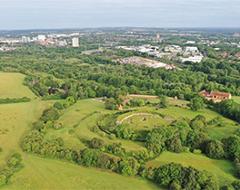
Aerial - Basingstoke CommonIt is recognised however that more needs to be done to stem and reverse the decline of nature in the borough, particularly in light of ever-increasing pressures from development, intensive agricultural practices, pollution and climate change. This requires action from a wide range of stakeholders and organisations, and we look forward to playing our part, along with partners, in delivering our aims and aspirations for nature over the coming years.
Potential local government reorganisation in the county may have significant implications for the council and its future work on biodiversity over the next reporting period. If local government reorganisation goes ahead in the region, the council will ensure it works closely with neighbouring councils and partners to help to encourage the new unitary council that replaces it to deliver for nature in a way that is as closely aligned as possible with the council’s current approach.

Background

Biodiversity is the variety of life around us; plants, animals, fungi, and microorganisms, interacting together in a range of ecosystems, provides us with the air we breathe, food we eat and water we drink; it has a strong cultural impact, significantly contributing to our mental and physical wellbeing, and spiritual and cultural beliefs.

Nature forms healthy soils and recycles nutrients; it ensures the growth and pollination of our crops and helps reduce the effects of climate change. It is critical in underpinning the wellbeing of our communities and forms the foundation for a stable economy. The services of nature have been shown to exceed the benefit of any manufacturing sector in England, exceeding £37.1 billion in 2022 according to DEFRA .

However, the state of nature is in decline. Between 1970 and 2022, the average abundance of species in the UK declined by a third and 13% of species are threatened with extinction. Risks to these essential ‘ecosystem services’ such as water scarcity, pollution and loss of species could shrink the UK economy by 3%3 over the next decade unless action is taken, estimates the Green Finance Institute.

Government has published its ‘Environmental Improvement Plan’ (EIP), a strategic framework to improve England’s natural environment. The EIP contains 10 goals, the first being ‘Restored nature’, with a delivery plan for action. This will require partnership working across a whole range of stakeholders from private and public sectors, and local councils will have various important roles to play.

The Environment Act 2021 introduced a strengthened ‘biodiversity duty’ which requires all public authorities in England to consider what they can do to conserve and enhance biodiversity. As a public authority, Basingstoke and Deane Borough Council must:

  • consider what it can do to conserve and enhance biodiversity
  • agree policies and specific objectives based on this consideration
  • act to deliver its policies and achieve its objectives

Black DamAdditionally, as a local authority, the council must publish a biodiversity report that sets out the policies and actions it has carried out to comply with the duty. This report forms the council’s first biodiversity report under the strengthened duty, covering the period 1 January 2024 to 31 December 2025. Following this, subsequent reports will be published at least every five years. These reports also help demonstrate the council’s role and action taken that contribute to goals within the government’s Environmental Improvement Plan.
This report is written in alignment with government guidance, containing a summary of action the council has taken to comply with the biodiversity duty, how it intends to comply with the duty in the next reporting period, and information on biodiversity net gain including actions taken to meet biodiversity net gain obligations, details of biodiversity net gain resulting, or expected to result from approved biodiversity gain plans, and how it plans to meet biodiversity net gain obligations in the next reporting period. Additionally, some further information is provided in the report to demonstrate the council’s efforts in conserving and enhancing biodiversity.

Information about the council and the borough

The council

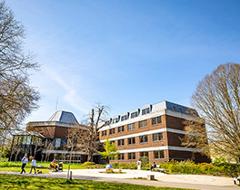
Deanes Council buildingBasingstoke and Deane Borough Council, first formed in 1974, is a local government authority that provides local services and governance in the district of Basingstoke and Deane. The borough lies in the north of Hampshire covering over 63,000 hectares (245 square miles) with a total population of 193,110 (as at 2024).
The council comprises a number of services that carry out various functions. These include waste collection, street care and grounds maintenance, leisure and open spaces, licensing and community work. It is also the local planning authority for the area, responsible for preparing the local plan and determining and enforcing planning applications.

The council owns approximately 1165ha of land in the borough (excluding land rented or sold). Of this, around 700ha is green space, of which approximately 40% (280ha) is managed by the council specifically for nature across 60 different sites.

The borough and its natural assets

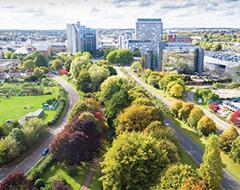
LGR Basingstoke Town Centre_Aerial 7The borough is predominantly a rural area, with some key urban settlements including the main town Basingstoke, as well as Tadley, Kingsclere, Whitchurch, Overton and Oakley, and numerous other villages and hamlets.
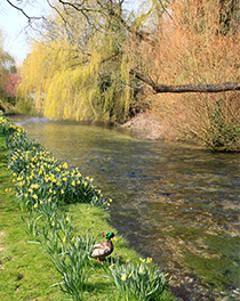
Over 75% of the land in the borough is defined as agricultural or woodland. Two distinct geological areas span the area, with two thirds lying on chalk bedrock and the other third on clay, giving rise to a distinct variety of habitats and species. Four important river corridors are present including the River Test and headwaters of the River Itchen in the south, the River Loddon in the east and the River Enborne to the north; the first three of these form chalk streams, a valuable and globally restricted habitat.

Approximately a third of the western part of the borough falls within the North Wessex Downs National Landscape.

The borough supports twenty nationally designated Sites of Special Scientific Interest (SSSI), one National Nature Reserve (NNR) and 11 local nature reserves. Together, these sites amount to 925ha. The borough also supports 835 locally designated Sites of Importance for Nature Conservation (SINC), covering 6306ha which forms 10% of the whole borough. All these sites benefit from legislative, national and/or local policy protection and are mapped on the Hampshire LNRS as ‘Areas of Particular Importance for Biodiversity’. Additionally, the borough has forty ‘Road Verges of Ecological Importance’ (RVEI), locally designated for their notable habitat and/or species interest.

river test southington

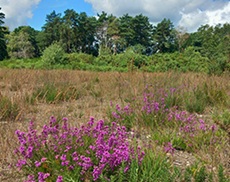
Important ‘priority habitats’ present in the borough, within and outside of its designated sites, include ancient semi-natural broadleaved woodland, wet woodland, wood pasture and parkland, rivers and wetlands, chalk downland, heath and acid grassland, lowland meadow, floodplain grazing marsh and arable field margin habitat. Together they cover 8434ha, 13% of the whole borough. Most of these areas, where not covered by designated sites, are mapped by the Hampshire Local Nature Recovery Strategy as ‘Areas That Could Become of Particular Importance for Biodiversity’. 200ha priority habitat is present across council-owned sites being favourably managed.

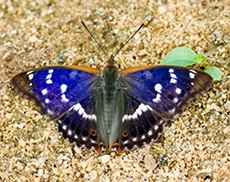
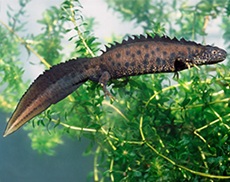
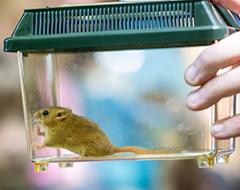
The borough also supports a range of notable and protected species including hazel dormouse, great crested newt, several bat species and common reptiles like grass snake and common lizard. Notable invertebrates include golden ringed dragonfly, beautiful demoiselle, and white admiral, purple emperor and Duke of Burgundy butterflies. Important birds include stone curlew and grey partridge, both farmland specialists. Rare fly orchids and cut leaved germander can be found within some of the area’s SSSI sites, and white helleborine orchids are commonly seen within and around Basingstoke.

The natural assets of the borough are well described in the council’s Biodiversity Audit report (July 2024), published on the council website.

Great Crested NewtHeathland at Wigmore Heath, TadleyPurple Emperor Butterfly

Council policies, objectives and actions

In 2021, the council declared an ecological emergency, recognising the drastic decline in nature and its importance for the future wellbeing of the borough. The emergency sets out a number of matters to be taken forward so that biodiversity is protected and enhanced and that its decline is reversed, including the embedding of ecological initiatives across council work areas and working with stakeholders and communities to promote habitat protection and restoration and provide opportunities for everyone to learn about and connect with nature. It also committed to supporting this work with additional officer resource that has resulted in more extensive and cohesive teams that support nature conservation issues.

The council has developed and adopted a range of plans, policies, strategies and actions that helps address the requirements of the ecological emergency declaration and enables the council to meet its biodiversity duty. The key policies, strategies and guidance are listed below. Table 1 sets out the actions the council has completed during the reporting period, either alone or in partnership with others, that benefit biodiversity.

Biodiversity Strategy for Basingstoke and Deane 2023 to 2029

The Biodiversity Strategy sets out a vision, priorities and actions that will be required to combat the decline of nature in the borough. Development of the Strategy commenced in 2023 and this formed the council’s ‘first consideration’ under the strengthened biodiversity duty of the action that it must take for biodiversity.

The Biodiversity Strategy was approved by Cabinet in March 2024 and published on the council website in September 2024. It sets out the importance of biodiversity and its status in the borough, and outlines a set of principles, objectives and actions to enable the organisation to support nature recovery and tackle the ecological emergency. The objectives set within it were developed following extensive engagement with stakeholders and the public. They are ordered into three groups covering:

  • what the council must do (e.g. statutory requirements)
  • where the council has direct control (e.g. through land ownership and management); and
  • where the council can lead, enable and inspire (e.g. partnership working, education and communications)

The strategy includes an action plan with 48 different actions organised under various aspects including:

  • ‘Partnership working’
  • ‘Planning’
  • ‘Organisation’
  • ‘People’
  • ‘Strategic Priorities’
  • ‘Monitoring and reporting’; and
  • ‘Estate management’

These are designed to help achieve the objectives within the strategy. Delivery of the actions is regularly monitored, with progress overseen by a Biodiversity Strategy Officer Delivery Group, which meets three to four times a year. The group is made up of officers from across relevant council teams and enables fair representation and input from across the council and its various remits and functions.

The council reports on the biodiversity strategy annually via the production and publishing of an annual committee report. Its first report was presented to the Environment and Infrastructure Committee on 5 December 2024, setting out the progress made by the council on the action plan. This is adjusted through its lifetime to ensure the strategy remains up to date and achievable, with the next update due in spring 2026.

Details of progress on actions under the strategy up until 31 December 2025 can be found detailed below in Table 1.

Basingstoke and Deane Local Plan 2011-2029 and the draft Local Plan 2024 to 2042

The council’s local plan, adopted in 2016, guides development in the borough and has a suite of environmental policies which protect the natural environment covering aspects such as landscape, strategic gaps, green infrastructure, water quality and pollution. Policy EM4 Biodiversity, Geodiversity and Nature Conservation is key for ensuring new development conserves habitats and species and achieves net gains for biodiversity where possible.

In the time since its adoption, several significant changes in environmental law, national policy and guidance have come in, not least with the introduction of the Environment Act 2021 that has brought in the strengthened biodiversity duty for public authorities, mandatory biodiversity net gain, and the requirement for local nature recovery strategies. Additionally, the National Planning Policy Framework has been updated and includes strengthened requirements for enhancing and securing net gains in biodiversity.

In line with the on-going cycle of plan making and review, the current local plan is being updated to ensure it reflects and aligns with both national and local objectives and latest policy and legislative changes. The council consulted on draft new environmental policies as part of the Regulation 18 consultation on a full draft plan in early 2024. The policies focus on protecting and enhancing biodiversity in line with the council’s strengthened biodiversity duty and cover the recent new environmental changes and requirements. It is the intention to publish and consult on the Publication Version Local Plan (Regulation 19) in the summer of 2026, with the aim of adopting the plan in winter 2027.

The government published a draft new National Planning Policy Framework (NPPF) for consultation in late 2025, which sets out draft national decision-making policies, including policies relating to the environment. The impact of these proposals on the local planning framework will be considered and the council will respond accordingly.

Hampshire Local Nature Recovery Strategy

The Hampshire Local Nature Recovery Strategy, prepared by Hampshire County Council, was officially published on 8 December 2025 and is publicly available. The borough council, in its role as a supporting authority, assisted with the development of the strategy. This involved regular attendance at a ‘Local Planning Authority Working Group’, review of and input into draft versions of mapping and background modelling, and three consultation responses (‘pre-consultation’, public consultation, and ‘final draft consultation’).

The Hampshire Local Nature Recovery Strategy sets local priorities for restoring nature, with a local habitat map that identifies the areas of importance and areas that could be of importance for biodiversity, and identifies measures to deliver those priorities. The council intends to guide planning decisions and investment into local priorities for protection and enhancement. As a local planning authority, the council has a legal duty to ‘take account’ of the Local Nature Recovery Strategy, and the evidence base it provides may form a material consideration in the planning system. The council will be a significant contributor to the delivery of the strategy and nature recovery within the borough, and will do this through planning application and policy work, project work, land management, partnership working and community engagement.

Green Infrastructure Strategy for Basingstoke and Deane (2018 to 2029)

Green infrastructure is a network of natural areas and other green open spaces that is vital to the health and quality of life of people in local communities and supports and enhances natural and ecological processes.

It benefits the public and the environment by providing attractive environments for outdoor recreation and exercise. It creates a sense of place; biodiversity enhancement; and other environmental benefits such as natural drainage to reduce flooding and helping us adapt to climate change. It can be used to help protect and plan the natural environment.

The borough has a very good range of green infrastructure assets, including:

  • Green Flag awarded parks in the heart of Basingstoke
  • the Forestry Commission’s Basing Wood to the north of Popley
  • some of the country’s most precious wildlife habitats
  • many public rights of way; and
  • accessible open countryside areas

The types of green infrastructure and their benefits are not evenly distributed, and the maximum benefits are not always realised. The council’s Green Infrastructure Strategy sets out a framework to address this, and the latest version was approved by Cabinet in November 2018. The council is currently working on updating this with a view to publishing a Green and Blue Infrastructure Strategy during financial year 2026/27, following public consultation.

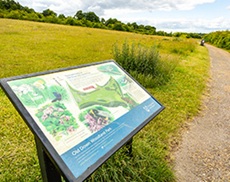
Biodiversity improvement zoneOpen space at Old Down Woodland Park, BasingstokeRiver Loddon running through Eastrop Park, Basingstoke Town Centre

Climate Change and Air Quality Strategy (December 2025)

The borough’s Climate Change and Air Quality Strategy sets out how the council works with others to tackle the climate crisis in support of its 2019 climate emergency declaration. This includes how it will work towards its two ambitious targets: to be a carbon-neutral council in December 2025, and to work with communities and partners towards a net zero carbon borough by 2045.

This strategy was adopted in December 2025, following a year-long process to build on progress so far by refreshing the original version of the strategy first approved in 2021. It was shaped through extensive engagement with technical experts, partners, community groups, businesses and residents including a six-week consultation over summer 2025.

Landscape, Biodiversity and Trees Supplementary Planning Document

The council adopted its Landscape, Biodiversity and Trees Supplementary Planning Document (SPD) on 13 December 2018.

The SPD explains how landscape, biodiversity and tree considerations should be integrated into the development process to ensure that the current Local Plan’s requirements are met and best practice is achieved. In particular, it supports the implementation of adopted Local Plan policies EM1 (Landscape), EM3 (Thames Basin Heaths Special Protection Area), EM4 (Biodiversity, Geodiversity and Nature Conservation), and EM5 (Green Infrastructure).

Species conservation strategies and protected site strategies

A requirement of the biodiversity duty is to ensure the council has particular regard to any relevant species conservation strategy or protected site strategy prepared by Natural England. At the time of publishing, no relevant strategies affecting the borough have yet been adopted.

Table showing key actions completed, alone or in partnership

Action
(Date)
Description
(related Biodiversity Strategy actions)
Result/outcome for nature
Organisation

Adoption of Biodiversity Strategy for Basingstoke and Deane 2023 to 2029 and delivery of its action plan The council’s Biodiversity Strategy and accompanying action plan was developed in 2023 and approved by Cabinet in March 2024, forming the council’s ‘first consideration’ under the strengthened biodiversity duty.

Officer delivery officer group set up that meets regularly to oversee and monitor progress.
Progress reported annually and presented to Environment and Infrastructure Committee.
(OG5
Regular monitoring and reporting is driving progress as well as the identification of future efforts, and enables public scrutiny and engagement. It also enables the future ability to identify trends for species and habitats in the borough over the medium to longer term.
The first Biodiversity Strategy annual committee report contains detailed information and data on progress up to December 2024. The second report is due in February 2026.
Chalk stream rivers motion
(May 2025)
Council passed a motion to recognise and support the Rights of Rivers movement to safeguard and enhance water and habitat quality in the borough’s chalk streams. Raised public awareness of chalk streams and pressures these habitats face. Greater consideration for council plans and projects that may impact or have benefit for waterways in the borough via a modified ‘ecological checklist’ for use by council teams. Action proposed to be added under biodiversity strategy action plan to monitor and reflect progress on protecting and enhancing rivers. The details of the motion will also be considered through the evolving draft Local Plan.
Designation of Local Wildlife Sites and declaration of LNRs
(Ongoing)
The council continues to support the designation of Local Wildlife Sites (called Sites of Importance for Nature (SINCs) in Hampshire), conservation through financially supporting HBIC, the local environmental record centre, identifying candidate sites and supporting decision making.
Review the priority list for local nature reserves (LNRs) and continue to deliver the programme of declaration.
(OG3 and OG4)
Seven new SINCs have been designated in the borough during 2024-2025, contributing to a total of 835 SINCs in the borough covering 6,306ha.

Priority habitats supported in the new SINCs include chalk, neutral and acid grassland, ancient broadleaved woodland, rush pasture, freshwater and wetland habitat.

In February 2026, Cabinet approved the declaration of the borough’s eleventh local nature reserve (LNR) at Little Pen Wood near Highclere, land management plan already produced and a conservation group set up.
Habitat management

Habitat management
(Ongoing)
The Ranger Services team manages approximately 30% of council-owned natural green space for nature amounting to over 270ha land.

(EM5)
In 2025, 85ha has been managed. This includes 18ha of meadow management (through cut and collect and scrub removal), plus improvement through seed harvesting and sowing (1.1 ha of meadow). Additionally, there is increased focus on woodland enhancement this year, with thinning being undertaken at twelve sites to increase light levels to improve ground flora diversity, and the establishment and maintenance of coppice rotations on ten sites. The ranger team have also increased the focus on improving riparian (wet) woodlands through thinning to improve light levels and reduce nutrient and sediments inputs at seven sites, aligning with Rights of Rivers principles.
Biodiversity Improvement Zone (BIZ)
(Completed 2025)
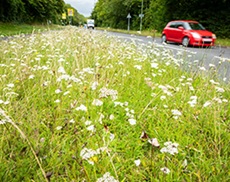
The council ran a 4-5 year pilot 'Biodiversity Improvement Zone' scheme in an area of Basingstoke, with a reduced cutting regime on road verges and some open spaces, to explore if changing how roadside verges and small green spaces are managed would enhance the variety of plant and insect life in the area.

(EM4)
The BIZ pilot completed in 2025 and successfully demonstrated a 56% increase in plant species. Much of the area supported enhanced chalk grassland supporting 237 different plants including bee orchids and yellow rattle. This also saw an increase in number and range of insect species, including a big expansion of the small blue butterfly.
The pilot provides a good example of connecting green spaces across the local urban landscape.
The cutting regime will continue in the area and the council is looking into similar schemes elsewhere in the town, with hopes to engage with the Big Chalk partnership and explore opportunities for a council-run biodiversity net gain scheme(s).
Crabtree and Dickens Lane Woodland Management Project
(2025-26)
A woodland planting and management project on the council’s Crabtree site east of Basingstoke required to compensate the loss of habitat for white helleborine orchids to a residential development in the town, funded by s106 monies from developers.

(PL3, PL5, EM5, PA3)
Project plan developed. Felling licence approved by the Forestry Commission in December 2025.
Works will involve the felling of non-native trees, ash die-back and 30% sycamore trees to rejuvenate the woodland; 880 native trees will be planted with the help of Natural Basingstoke and conservation volunteers. Tree logs and trunks will be used to provide deadwood habitat and help manage access on the site to encourage the expansion of white helleborines. Works began in January 2026.
Tree planting One of the council’s key performance indicators relates to achieving a net increase in tree planting on council owned land. This aims to increase local biodiversity and help tackle the climate crisis. Trees are planted within our woodland sites, public open spaces and as part of landscaping schemes. During 2023-24, 1870 trees were planted.
In 2024-25, 310 trees were planted, 105 more than the number felled in the preceding 12 month period.
In 2025-26, 1028 trees were planted.
Planning and biodiversity net gain
Biodiversity net gain
(April 2024 - ongoing)
Mandatory BNG commenced in February 2024 for major development and April 2024 for minor development. Changes were needed to ensure the new framework was suitably incorporated to ensure developers could meet their new statutory obligations.
(PL3).
The council implemented the new framework through new and modified procedures and processes, with internal training provided to planning and biodiversity officers. This has enabled the tracking, monitoring and reporting of BNG secured by eligible development in the borough.
Prior to mandatory BNG, the council was one of the first to set out a local requirement on development to provide net gains for biodiversity using an historic iteration of the Defra metric. 30 visits have been made to such sites to monitor delivery progress.
Ten developments have had Biodiversity Gain Plans approved resulting in an overall net gain of over 20%, the majority of which has been delivered within the borough.
The gains come mainly from creation and/or enhancement of grassland and scrub habitat, species-rich native hedgerow and native hedgerow.
(More detailed results can be seen under Section 3 of this report).
Habitat banks – facilitation and securing by legal agreement
(Sept 2025)
Land management schemes run by landowners/third parties, that enhance/create habitat designed to support biodiversity net gain. Such schemes must be legally secured either by s106 with the council, or by a conservation covenant with a Responsible Body.
(PL3 and PL4)
In September 2025 the council signed off the first privately-run habitat bank in the borough, a 4.5ha site in Kingsclere, that will be managed to deliver species-rich grassland, new scrub, hedgerow and tree planting.
The scheme has generated 19.14 units – a net gain of 77% for grassland and scrub habitats, and a gain of 45% for hedgerows and trees. It connects hedgerow and woodland habitat within the local landscape.
All units were sold immediately, enabling sustainable development in and outside of the borough.
People - community engagement


Corporate and community engagement - habitat conservation
(Ongoing)
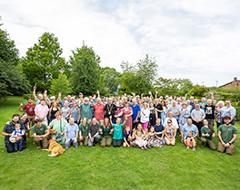
The Ranger Services and Biodiversity Teams work closely with local communities and particularly its key conservation partner, Natural Basingstoke. The Ranger team sets up local conservation groups to help them manage council-owned sites for nature.
The Ranger Services team also runs corporate events for local businesses that volunteer their staff to help with habitat management. Additionally, community payback sessions are also run every year.

(PE7)
As at December 2025, 17 conservation groups have been set up across the borough. 266 volunteers worked with in 2025 (227 in 2024) from across these groups to actively manage habitats and species, amounting to a total of 12,052 volunteer hours up to Dec 31st (14,519 hours in 2024-25).
Annual ‘thank you’ event hosted in 2024 and 2025 by the Council Mayor, councillors and officers for volunteers to show appreciation of their efforts and dedication.
In 2025, 29 corporate events have been carried out on council managed sites involving 252 people (370 people in 2024-25).
Raising awareness and access for nature
(2024 – ongoing)
Garden assessments
(2024-25)
The Green Team (part of the council’s Climate Change Team) carry out garden assessments to help residents make enhancements for nature in their gardens. A total of 526 garden assessments carried out up to December 2025. Of these, a third so far have been asked to provide feedback. Of those who responded, 70% have confirmed they have taken action, including things like planting wildlife friendly plants, installing bird boxes and insect houses, and creating ponds, log piles and wild areas.
Native tree giveaway
(2024-25)

The council helped to facilitate the ‘Tree-mendous Giveaway’, which was funded by Hampshire County Council to hand out free native trees to residents to plant in their gardens. The aim was for the trees to help contribute towards the climate and ecological emergencies. Over 3,300 free trees were handed out to residents. The scheme was so popular it had to close to new requests after a couple of days.
Monitoring nature

Monitoring plan for habitats and species
(2025 – ongoing)
A new monitoring framework, developed by the Biodiversity team details how the council will monitor many of the Strategy’s identified priority species on its own sites, including moths and butterflies, reptiles and amphibians, bats, dormice and riverflies. This is being implemented in conjunction with the Ranger team, and an important element of this requires engagement of volunteers from the local community to assist with data gathering.

(MR2)
20 extra volunteers have been recruited from current conservation groups to aid with the monitoring effort, carrying out bat, reptile, moth and butterfly surveys on various council sites.
Trained council officers have also carried out survey work on reptiles and riverflies helping us understand the condition of our sites and inform future management.
The surveying season in 2025 saw approximately double the number of records submitted by volunteers and officers due to these efforts, with 4531 new records, and 585 new species recorded. The majority of these new species were butterflies (15), moths (186), and plants (89), including the s41 priority species brown hairstreak and grizzled skipper butterflies, and small phoenix and small emerald moths.
Biodiversity Audit project
(July 2024)
The council commissioned a Biodiversity Audit of the Borough, produced by the Hampshire and Isle of Wight Wildlife Trust.

(MR1)
The council published its biodiversity audit that sets out the state of nature within the borough. It shows the borough supports some valuable biodiversity features but more work is needed on heathlands and wetlands and their associated species.
It is intended to repeat this work every five years to monitor overall trends of habitats and species and help reporting.
Partnership working


Hampshire LNRS – development and adoption
(2023-2025)
The council has supported the development of the Hampshire Local Nature Recovery Strategy.

(PA2 and SP2)
In December 2025 the Strategy was approved by the Secretary of State for Environment, Food and Rural Affairs and has now been published. Biodiversity and planning teams have already been having regard to the Hampshire Local Nature Recovery Strategy in preparation for the local plan and in planning applications, and it will be used to influence land management plans for council-owned open spaces.
North Wessex Downs National Landscape
(Ongoing)
The council is a member of the NWDNL Council of Partners, which meets three times a year. The council provides a financial contribution towards the partnership every year as part of its duty.
In 2025, the council also provided support and input into the development of the North Wessex Downs National Landscape Management Plan 2025-2030
(PA2)
NWDNL Management Plan published in November 2025.
Hampshire Biodiversity Information Centre
(Ongoing)
HBIC is the local environmental records centre for Hampshire. The council funds them in return for data services and works in partnership with them on wider projects and community events to promote nature and species recording. HBIC is one of the council’s most crucial and valued partners with regard to protecting and enhancing nature in the borough.

(PA2)
In 2025 a new three-year service level agreement has been signed with HBIC to ensure we are provided with annual updates on biodiversity data for the borough and the wider county.
HBIC has supported two council-linked ‘Bioblitz’ events in the borough, with over 150 members of the public and over 355 species recorded.
Supporting HBIC has led to the designation of seven new SINCs in the borough since 2024 which will receive protection through local policy.
Great crested newt district licence - collaboration with NatureSpace
(Mar 2024 – present)
In March 2024 the council joined the NatureSpace district licence scheme that benefits great crested newts by creating or enhancing habitats in targeted areas to increase and re-connect populations at the landscape scale. Under the District License Scheme, developers make a ‘conservation payment’ towards offsite habitat delivery for great crested newts, delivered by the Newt Conservation Partnership who also take the responsibility for long-term monitoring and management.
The council has published information on its website, and training has been delivered to planning case officers on the scheme and how it should be dealt with in the planning system.

(PL9)
In the borough, so far three new ponds and over 12ha high-quality terrestrial habitat have been constructed.
Partnership for South Hampshire (PfSH) Natural Environment Group This was originally set up as the PfSH water quality working group to consider water quality issues and solutions across Local Authorities within the ‘Solent’ catchment, in particular nutrient neutrality. Its remit was subsequently expanded to include biodiversity issues (although the council has not participated in this element). The group resulted in the setting up of the Strategic Environment Project Team (led by Fareham Borough Council), resulting in strategic nutrient neutrality solutions and spending of Local Nutrient Mitigation Fund contributions within the catchment, enabling ‘nutrient-neutral’ development in the borough.

(PA2)

Future actions for nature

Over the next five years, the council intends to continue progress under its Biodiversity Strategy, modifying its action plan as actions are completed and work evolves. Key actions and aspirations the council intends to carry out over the next reporting period are listed below.

  • BioBlitz_wildlifeBiodiversity Strategy for Basingstoke and Deane 2023 to 2029 – continue to deliver and monitor progress under the Strategy Action Plan, with annual updates as required. Report annually to committee on the Strategy’s identified priorities (including habitats and species, designated sites and accessible greenspace), as well as efforts in site management and monitoring, planning, biodiversity net gain and community engagement; the second annual report was presented to the Environment and Infrastructure Committee in February 2026. Towards the end of the current strategy period, review and update the overall strategy to cover period 2029-2034
  • Rights of Rivers – the council will seek to adopt a declaration on the Right of Rivers and further embed the protection and enhancement of the water environment into key strategies and into the emerging local plan, and project work;
  • Habitat management – continue to manage council-owned sites for nature, focussing on habitat creation and restoration and control of invasive non-native species; expand the extent of this where resources allow;
  • Monitoring of species and habitats – as referenced above, continue to survey and monitor priority species and habitats identified within the council’s biodiversity strategy, to be carried out by council officers in conjunction with assistance from local volunteers;
  • Project work – develop and implement council-led or partnership projects that deliver habitat enhancement, particularly including chalk streams. Explore the opportunity to generate biodiversity net gain units from habitat creation and/or restoration. Seek to expand the council’s biodiversity improvement zone project to other areas of Basingstoke and Deane, exploring the opportunity to generate biodiversity net gain units from habitat creation and/or restoration;
  • Hampshire Local Nature Recovery Strategy delivery – incorporate consideration of the strategy into council functions and decision making. Deliver and encourage the delivery of identified measures for nature on land in the borough, through management of council owned sites and planning;
  • Strategic planning – develop a suite of strong environmental policies in the draft local plan that will contribute to the protection and enhancement of biodiversity, taking account of national policies and legislation; ensure the draft local plan aligns closely with priorities in the Hampshire Local Nature Recovery Strategy; conduct and update as soon as possible environmental assessments to support the evolution of the draft Local Plan including strategic environment assessment, habitats regulations assessment and water cycle study;
  • Strategies and policy – the council will develop and publish a green and blue infrastructure strategy to set out an updated framework for the distribution, design and management of our green spaces and habitats. Additionally, it will look to review and update its tree policy to guide the protection and management of trees across the borough;
  • Biodiversity net gain – continue to track, monitor and enforce (where necessary) offsite and significant onsite biodiversity net gain secured through planning. Encourage alignment of biodiversity net gain proposals with priorities set within the Hampshire LNRS to target habitat enhancements;
  • BioBlitzHabitat banks – facilitate the establishment of further private habitat banks in the borough to support the local biodiversity net gain market and enable sustainable development. Explore, design and implement council-run habitat banks to be secured by a conservation covenant(s) in collaboration with a suitable Responsible Body(ies);
  • Partnerships – continue to work closely with external partners to deliver for nature, including Natural Basingstoke, neighbouring authorities, non-governmental organisations such as the Hampshire and Isle of Wight Wildlife Trust and river catchment partnerships, and statutory agencies. Continue to represent on the NWDNL Council of Partners and the PfSH Natural Environment Group. Continue to support and collaborate with HBIC to enhance and monitor biological data. Explore setting up a borough-wide partnership for nature;
  • Community engagement – working across council teams and in partnership with Natural Basingstoke, increase reach and engagement with local communities to increase public awareness and access to nature, and deliver more for nature through active voluntary work. Expand educational outreach for Key Stage 2 and Key Stage 3 students and form a partnership with a local further education establishment;
  • Internal engagement - deliver further biodiversity training to internal council teams to increase awareness of biodiversity and cover aspects such as biodiversity net gain and the local nature recovery strategy. Encourage engagement from other teams in identifying opportunities and progressing action for nature across the council’s different functions;
  • Locally designated sites - continue to support the identification and designation of new SINCs and the declaration of new local nature reserves in the borough.

Conservation volunteersIn spring 2026, a decision from government is expected following consultation on local government reorganisation proposals for Hampshire, Isle of Wight, Portsmouth and Southampton. This may have significant implications for the council’s aims and aspirations for action on biodiversity during the next reporting period.

At the time of writing, these implications are not yet known and therefore the future actions listed above represent the council’s current approach in the scenario if local government reorganisation does not go ahead. If local government reorganisation is set to proceed, the council will work closely with neighbouring councils to support the new unitary authority to be set up in a way that would see it capably meet its own biodiversity duty and deliver for nature in a manner that is as closely aligned as possible with the council’s current approach.

Biodiversity net gain information

Biodiversity net gain is an approach to development that ensures habitats for wildlife are left in a measurably better state than beforehand. It is now a mandatory requirement for all development (save for some exemptions) under the Town and Country Planning Act 1990 (as amended by the Environment Act 2021).

Under the new statutory framework, every grant of planning permission is subject to a pre-commencement ‘biodiversity gain condition’ where the developer is required to submit a ‘Biodiversity Gain Plan’ (BGP). The plan must set out certain information including pre- and post-development biodiversity values of the onsite habitat (i.e. within the red line boundary), details of any registered offsite biodiversity gains allocated to the development, and/or biodiversity credits purchased for the development.

Actions taken by the council to meet biodiversity net gain obligations

The council has taken various measures in order to implement mandatory biodiversity net gain. This has included making changing to procedures and processes in the planning system, tracking, monitoring and reporting biodiversity net gain secured by eligible development in the borough, and supporting the establishment of a local biodiversity net gain market by facilitating habitat banks in the area. This is set out in more detail below:

  • Procedural change – the council has implemented changes in the planning process and officer training to ensure biodiversity net gain is properly assessed and addressed by planning and biodiversity officers in line with the mandatory legislation and government guidance. This includes:
    • Validation stage - checking applications against relevant validation criteria including eligibility, minimal information requirements, site degradation and impacts on irreplaceable habitat
    • Application stage – scrutiny of plans, statutory metrics and habitat condition assessment sheets; appropriate response wording/input from internal Biodiversity consultees; addition of the biodiversity gain condition to the decision notice and any appropriately worded planning condition to secure onsite biodiversity net gain; consideration and drafting of legal agreement as needed
    • Discharge of condition – scrutiny of submitted biodiversity gain plans and accompanying information including finalised metrics, plans and Habitat Management and Monitoring Plans (HMMPs); updating of recording spreadsheets and GIS software
    • Post-approval stage – monitoring of biodiversity net gain delivery as per planning condition or S106.
  • Monitoring biodiversity net gain – the council monitors biodiversity net gain in the borough in two ways:
    • Tracking expected biodiversity net gain gains and losses from approved eligible developments using data from approved biodiversity gain plans and statutory metrics, carried out manually using spreadsheets and GIS software.
    • Review of biodiversity net gain monitoring reports submitted by developers and habitat bank providers for offsite and significant onsite biodiversity net gain where secured by a s106 with the council. Monitoring of onsite and offsite biodiversity net gain delivery will commence in line with the relevant planning obligations for each development (generally commencing in the autumn of Year 1 of biodiversity net gain delivery). Biodiversity officers will review monitoring reports sent in by the developer and will carry out spot checks as necessary. Monitoring is expected to commence in 2026/27 (noting that monitoring of pre-mandatory biodiversity net gain secured prior to February 2024 has already been ongoing). This is funded by a BNG monitoring fee as published on the council’s budgets and spending webpage.
  • Reporting biodiversity net gain – the data from biodiversity net gain monitoring informs annual reporting under the council’s Biodiversity Strategy as well as the council’s five-yearly biodiversity reporting under its strengthened biodiversity duty (this report forms the first of these).
  • Supporting the local biodiversity net gain market – in September 2025, the council signed off the first privately-run habitat bank in the borough, a 4.5ha site at Old Rectory Farm in Kingsclere. Habitat banks are a way of generating ‘biodiversity units’ from habitat enhancements on a piece of land that can be sold to developers who can’t meet their own biodiversity net gain requirements onsite; having habitat banks within the borough can stimulate the local biodiversity net gain market and will help retain the benefits of biodiversity net gain for local people and wildlife. The Old Rectory Farm scheme has generated 19.14 units – a net gain of 77% for grassland and scrub habitats, and a gain of 45% for hedgerows and trees. A second habitat bank, a 12ha site in the Ellisfield area, is now being considered with the legal agreement currently being developed. This scheme could deliver 74.5 units, a net gain of 322% of grassland, scrub and woodland habitats on the site, and 5 units or 309% gain in hedgerows. It is anticipated this scheme will get the sign off before the end of the 2025/26 financial year.
Biodiversity net gain data for development in Basingstoke and Deane covering period 12 February 2024 – 31 December 2025

Appendix 1 sets out data gathered from all approved biodiversity gain plans in Basingstoke and Deane for the reporting period February 2024 (since mandatory biodiversity net gain came into force for major development) to 31 December 2025. The headline data are detailed below:

  • Eligible planning permissions - ten biodiversity gain plans have been approved over the reporting period. Eight of these developments have secured their biodiversity net gain entirely onsite; one has secured biodiversity net gain delivery solely through offsite units, and one development has sought biodiversity net gain through a combination of onsite and offsite units.
  • Overall expected gains and losses - the overall average % net change is 20.24% (3.43 habitat units and 0.67 hedgerow units). The average % net change in onsite units is 19.99% (an increase of 3.24 habitat units and 0.67 hedgerow units). The average % net change in offsite units stands at 28.36% (an increase of 0.19 habitat units). No developments in the borough have secured biodiversity net gain through the purchase of government statutory credits.
  • Impacts on irreplaceable habitat (ancient woodland of lowland fen in the Basingstoke and Deane area) – no biodiversity net gain-eligible developments in the borough have impacted irreplaceable habitat.
  • Location of offsite biodiversity units - one development has secured biodiversity net gain delivery solely through offsite units within the local planning authority boundary, and one development has sought biodiversity net gain through a combination of onsite and offsite units, with the latter purchased from a habitat bank outside of the local planning authority boundary (near London).
  • Results of monitoring biodiversity gains – no monitoring of reports/spot checking has yet occurred due to the early stage in the process. This is expected to commence in 2026/27.
  • Composition of habitat gains (areas) – the gains come mainly from creation and/or enhancement of grassland and scrub habitat, along with some smaller gains in woodland and individual tree habitat. (Habitat losses come mainly from urban habitat types and some ‘sparsely vegetated land’.)
  • Composition of habitat gains (hedgerows and lines of trees) – gains originate mainly from creation and/or enhancement of species-rich native hedgerow and native hedgerow. (Habitat losses come mainly from lines of trees and some non-native ornamental hedgerow.)
  • Composition of habitat gains (watercourses) – no developments have been required to secure gains in watercourses over the reporting period.

Monitoring of onsite and offsite biodiversity net gain delivery will commence in line with the relevant planning obligations for each development (generally commencing in the autumn of Year 1 of biodiversity net gain delivery). Biodiversity officers will review monitoring reports sent in by the developer and will carry out spot checks as necessary. Monitoring is expected to commence for the developments listed below in 2026/27.

Looking ahead

The council plans to meet biodiversity net gain obligations over the next reporting period through the following specific actions:

  • continue to track, monitor and report on biodiversity net gain in the borough
  • adapt processes and procedures as required with any future legislative or national policy changes to the mandatory framework
  • develop local plan policy to appropriately reflect biodiversity net gain in line with national policy and provide guidance to developers and landowners, including on proposed allocated sites
  • encourage the use of the Hampshire Local Nature Recovery Strategy to target offsite biodiversity net gain in the most ecologically optimal areas of the borough
  • formalise and implement a process for establishing further private habitat banks in the borough to help facilitate the local offsite biodiversity net gain market, supported with appropriate promotion and collaboration with landowners and habitat bank scheme promoters
  • explore the delivery of a habitat bank(s) on council-owned land through collaboration with responsible bodies
  • engage with partners and government on biodiversity net gain guidance and policy development

If local government reorganisation in Hampshire and the Isle of Wight goes ahead, this will have obvious repercussions for the council and its future planned work on biodiversity net gain. The council will work closely with its neighbouring councils to ensure a smooth transition to the new unitary authority, including encouraging it to adopt an approach to biodiversity net gain that reflects the council’s current priorities and ambitions across the area as closely as possible.

Appendix one: biodiversity net gain reporting from February 2024 to December 2025

Table 1 - Eligible planning permissions granted under the Town and Country Planning Act 1990 requiring biodiversity net gain

Consented applications
requiring net gains
Number Proportion
Total number of planning
permissions granted that
require biodiversity net
gain in the reporting period
18 Not applicable
Total number of planning permissions
granted in the reporting period where
an exemption to the biodiversity
net gain condition applies
269 from listed exemptions Not applicable
Total number of biodiversity gain
plans approved in the reporting period
10 Not applicable
Total number of biodiversity gain
plans approved in the reporting
period securing BNG through
on-site units only
8 80%
Total number of biodiversity
gain plans approved in the reporting
period securing BNG through
off-site units only
1 10%
Total number of biodiversity
gain plans approved in the reporting
period securing BNG through
statutory credits only
0 0%
Total number of biodiversity
gain plans approved in the reporting
period securing BNG through
a combination of on-site and
off-site units
1 10%
Total number of biodiversity
gain plans approved in the reporting
period securing BNG through a
combination of on-site units
and statutory credits
0 0%
Total number of biodiversity
gain plans approved in the reporting
period securing BNG through a
combination of off-site units
and statutory credits
0 0%
Total number of biodiversity
gain plans approved in the reporting
period securing BNG through a
combination of on-site, off-site
units and statutory credits
0 0%

Appendix one: biodiversity net gain reporting from February 2024 to December 2025

Table 2 - Overall expected gains and losses across all biodiversity gain plans approved in the reporting period

Overall expected gains and losses Total or average
Total number of pre-development biodiversity
units approved on site, broken down by
area/hedgerow/watercourse
Area: 16.62
Hedgerow: 2.95
Watercourse: 0
Total number of post-development biodiversity
units approved on site, broken down by
area/hedgerow/watercourse
Area: 19.87
Hedgerow: 3.61
Watercourse: 0
Total net unit change in biodiversity
units, on-site broken down by
area/hedgerow/watercourse
Area: 3.24
Hedgerow: 0.67
Watercourse: 0
Average percentage (%) change in
biodiversity units, on-site
19.99%
Total number of baseline biodiversity
units approved off-site, broken down by
area/hedgerow/watercourse
Area: 0.67
Hedgerow: 0
Watercourse: 0
Total number of post-intervention
biodiversity units approved off-site,
broken down by area/hedgerow/watercourse
Area: 0.85
Hedgerow: 0
Watercourse: 0
Total net unit change in biodiversity
units, off-site broken down by
area/hedgerow/watercourse
Area: 0.19
Hedgerow: 0
Watercourse: 0
Average percentage (%) change in
biodiversity units, off-site
28.36%
Total number of biodiversity units
offset using statutory credits, broken
down by area/hedgerow/watercourse
Area: 0
Hedgerow: 0
Watercourse: 0
Total net unit change in biodiversity
units (including any units offset
using credits)
Area: 0
Hedgerow: 0
Watercourse: 0
Average percentage (%) change
(including statutory credits)
20.24%

Appendix one: biodiversity net gain reporting from February 2024 to December 2025

Table 3 - Impact on irreplaceable habitat

Impact on irreplaceable Total Proportion
Total number of biodiversity gain
plans approved in the reporting period
where the on-site change negatively
impacts irreplaceable habitats
0 0

Appendix one: biodiversity net gain reporting from February 2024 to December 2025

Table 4 - Location of off-site biodiversity units

Location of off-site biodiversity units Total Proportion
Number of off-site biodiversity units
located inside the local planning
authority boundary or National
Character Area (NCA) of impact site
0.11 58%
Number of off-site biodiversity units
located inside the local planning
authority boundary or NCA of impact
site, but in neighbouring local
planning authority or NCA
0 0%
Number of off-site biodiversity units
located outside of the local planning
authority boundary or NCA of impact
site and a neighbouring local
planning authority or NCA
0.08% 42%

Appendix one: biodiversity net gain reporting from February 2024 to December 2025

Table 5 - Results of monitoring biodiversity gains

Results of monitoring biodiversity gains
where the local planning authority is
part of the legal agreement
Total Proportion
Number of applications with approved
biodiversity gain plans including the
delivery of ‘significant’ on-site gains
1 10%
Number of applications with approved
biodiversity gain plans that are
meeting monitoring requirements and
habitat delivery expectations for
‘significant’ on-site gains
0 0%
Number of applications with approved
biodiversity gain plans that are
meeting monitoring requirements but
not meeting habitat delivery
expectations for ‘significant’
on-site gains
0 0%
Number of applications with approved
biodiversity gain plans that are
failing to meet monitoring
requirements for ‘significant’
on-site gains
0 0%
Number of applications with approved
biodiversity gain plans where the
status of monitoring requirements is
unknown for ‘significant’ on-site gains
0 0%
Number of applications with approved
biodiversity gain plans including the
delivery of off-site gains, where
the local planning authority is
responsible for monitoring
0 0%
Number of applications with approved
biodiversity gain plans that are
meeting monitoring requirements and
habitat delivery expectations for
offsite gains where the local
planning authority is responsible
for monitoring
0 0%
Number of applications with approved
biodiversity gain plans that are
meeting monitoring requirements but
not meeting habitat delivery
expectations for offsite gains where
the local planning authority is
responsible for monitoring
0 0%
Number of applications with approved
biodiversity gain plans that are
failing to meet monitoring
requirements for offsite gains where
the local planning authority is
responsible for monitoring
0 0%
Number of applications with approved
biodiversity gain plans where the
status of monitoring requirements is
unknown for offsite gains where the
local planning authority is
responsible for monitoring
0 0%
 
Enforcement actions taken
in the reporting
Total Proportion
Number of enforcement actions taken
during the reporting period associated
with the biodiversity net gain policy
0 0%

Appendix one: biodiversity net gain reporting from February 2024 to December 2025

Table 6 - Composition of biodiversity gains - areas

Habitat type -
area
Total
biodiversity
units
at
baseline
Total
hectares
at
baseline
Total
biodiversity
units
post-
development
Total
hectares
post-
development
Net
change
in
biodiversity
units
Net
change
in
hectares
Cropland 0 0 0 0 0 0
Grassland 3.67 1.50 6.50 1.94 2.83 0.44
Heathland
and scrub
0.21 0.03 1.63 0.34 1.42 0.31
Lakes 0 0 0 0 0 0
Sparsely
vegetated
land
0.35 0.09 0.04 0.01 -0.31 -0.08
Urban 2.96 6.32 1.35 5.63 -1.61 -0.66
Wetland 0 0 0 0 0 0
Woodland and
forest
2.43 0.46 3.12 0.46 0.69 0.00
Intertidal
sediment
N/A N/A N/A N/A N/A N/A
Coastal
saltmarsh
N/A N/A N/A N/A N/A N/A
Rocky shore N/A N/A N/A N/A N/A N/A
Coastal lagoons N/A N/A N/A N/A N/A N/A
Intertidal
hard structures
N/A N/A N/A N/A N/A N/A
Watercourse
footprint
N/A N/A N/A N/A N/A N/A
Individual
trees
7.67 0.83 8.08 1.16 0.41 0.34
Total 17.29 9.23 20.72 9.54 3.43 0.35

Appendix one: biodiversity net gain reporting from February 2024 to December 2025

Table 7 - Composition of biodiversity gains - hedgerows and lines of trees

Habitat type –
hedgerows and
lines of trees
Total
biodiversity
units at
baseline
Total
kms
at
baseline
Total
biodiversity
units
post-
development
Total
kms
post-
development
Net change
in
biodiversity
units
Net
change
in
kms
Species-rich
native hedgerow
with trees –
associated with
bank or ditch
0 0 0.00 0.00 0 0
Species-rich
native
hedgerow
with trees
0 0 0.00 0.00 0 0
Species-rich
native hedgerow –
associated
with bank or
ditch
0 0 0.00 0.00 0 0
Native hedgerow
with trees –
associated with
bank or ditch
0 0 0.00 0.00 0 0
Species-rich
native hedgerow
0 0 2.76 0.41 2.76 0.41
Native hedgerow –
associated with
bank or ditch
0 0 0.00 0.00 0 0
Native hedgerow
with trees
0 0 0.00 0.00 0 0
Ecologically
valuable line
of trees
0 0 0.00 0.00 0 0
Ecologically
valuable line
of trees –
associated with
bank or ditch
0 0 0.00 0.00 0 0
Native hedgerow 0 0 0.04 0.01 0.04 0.01
Line of trees 2.60 0.77 0.66 0.19 -1.94 -0.58
Line of trees
associated with
bank or ditch
0 0 0.00 0.00 0 0
Non-native
and ornamental
hedgerow
0.35 0.34 0.15 0.15 -0.2 -0.19
Total 2.95 1.11 3.61 0.76 0.66 -0.35

If you require a printed version of the report email the Biodiversity team.

Sign up for email updates

Receive information on council services, news and events by email.

© 2026 Basingstoke and Deane Borough Council