Hedgerows - a guide to their management
This leaflet explains the importance of hedgerows, the best way to manage them for wildlife and the practicalities involved.
Why manage hedgerows?
Hedgerows can provide an excellent wildlife habitat and can be wonderful landscape features. Good hedgerow management can provide benefits such as:
- a home for a variety of insects including beetles, butterflies and bumble bees which are important to pollination of crops and can control pests
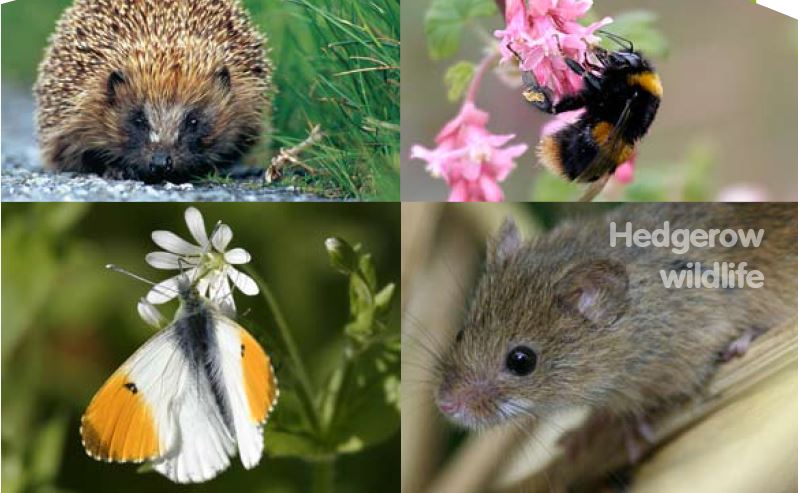
- a valuable food source such as fruit, nuts and insects for a variety of birds (such as yellowhammers and bullfinches) and mammals (such as hedgehogs and harvest mice)
- important wildlife corridors linking different habitats
- shelter for livestock and crops and preventing soil erosion by cutting down wind speed
- hedgerows are the primary habitat of 13 bird species of principal importance in the UK
- hedgerows are closely associated with a number of European Protected Species, notably dormouse, most species of bat and great-crested new
General hedgerow maintenance
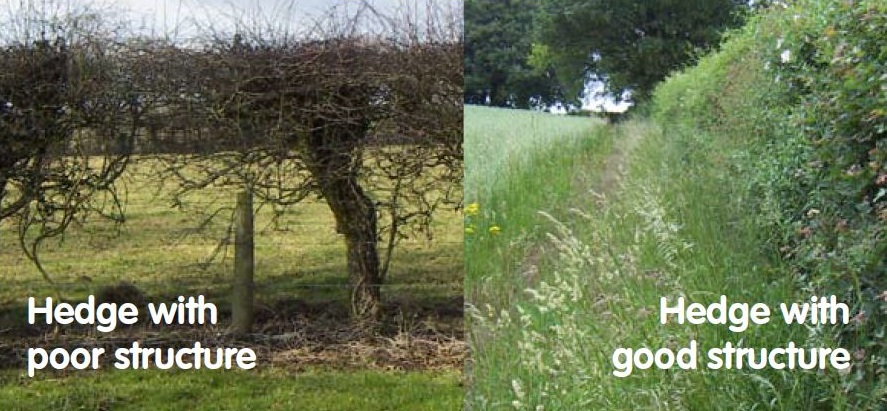
Tall, thick bushy hedgerows are more valuable for wildlife and as stock proof fencing than low, thin ones but a variety of hedgerow shapes and sizes will support the greatest diversity of wildlife. Hedgerows need to be cut to keep them thick and bushy. However, annual cutting is not always needed:
- only cut each hedge every two years; this reduces maintenance and labour costs, creates a bushier hedge for wildlife and allows flower and berry production in the intervening years
- hedges with slow growing species, such as hawthorn, can be cut on a three year cycle.
- do not cut back to the same height repeatedly, raising the cutting height each time will avoid placing the hedge under stress and allow it to regenerate more vigorously
- cut hedges to a variety of shapes and sizes; 'A' shaped hedges provide good stock proofing and shelter, create song posts for birds and enable hedgerow trees to develop if left untopped
- leaving one to two metre (or wider) verges of tall grass by hedges provides nesting habitat for birds and protects hedgerows from pesticide or fertiliser spray drift
- hedges can be trimmed, laid and coppiced from September to February but try and cut as late in the winter as possible so wildlife can take advantage of the nuts and berries produced in the autumn
REMEMBER: If you are a Single Payment Scheme claimant in England, it is a condition that you should not cut your hedgerows between 1 March and 31 July. This time period is extended by 1 month to the 31 August if the hedges have been entered into Natural England’s Entry Level Stewardship.
Hedgerow restoration - laying or coppicing
Hedge laying or coppicing are traditional methods of rejuvenating hedges that have become overgrown or gappy due to neglect, old age or poor management. It is best undertaken in winter when the plants are dormant although you should avoid very frosty weather. Sooner or later all hedgerows will require laying or coppicing. This should be at intervals of between 10 and 15 years to keep them stock proof.
Grant funding towards hedgerow restoration is sometimes available through Natural England’s Higher Level Stewardship (HLS) but only if it forms part of a much wider environmental improvement scheme which includes other features across the farm - contact Natural England for more information: 0300 060 1112 If you live within the North Wessex Downs Area of Outstanding Natural Beauty (AONB) funding for hedgerow restoration may be available from the AONB’s Sustainable Development Fund – visit the North Wessex Downs website or contact the office 01488 685449 for more information: or visit their website Grant funding for communities who wish to carry out small environmental enhancement schemes, such as hedge planting, is available through Basingstoke and Deane Borough Council’s Community Environmental Enhancement Fund.
Coppicing is the best treatment for hedges with large gaps or stems that are too large to lay. It is also a particularly useful method for exceptionally wide hedgerows or linear woodland strips/shaws. Coppicing is cheaper and requires less skilled labour than hedge laying.
Hedge laying
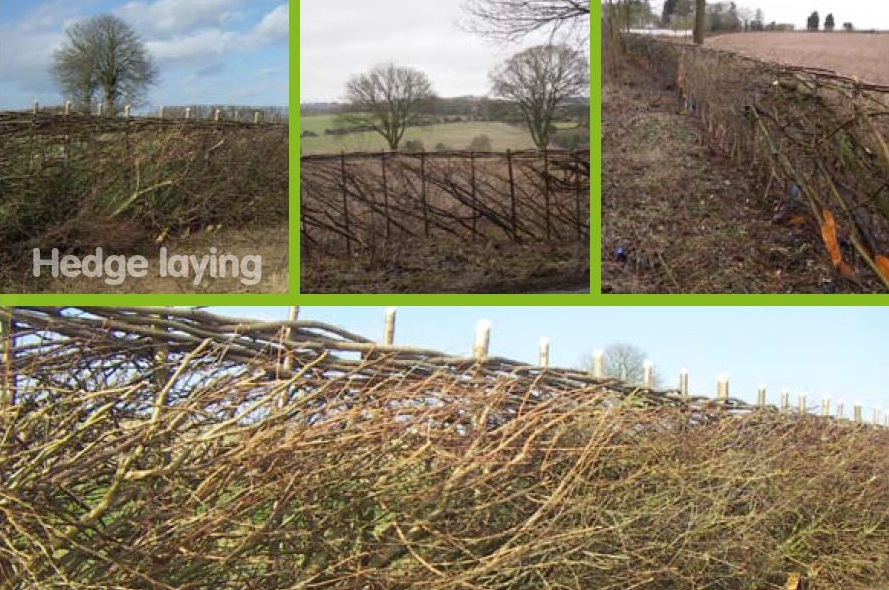
Hedge laying involves partially cutting a stem at the base, so that it will bend without breaking, yet still continue to grow. It is a way of stock proofing a gappy hedge and ensures the long-term viability of the hedge by promoting vigorous regrowth from the base.
- Hedges suitable for laying must be sufficiently tall (2.5 to 5m high) with stems approximately 5 to10 cm thick at the base
- The tall stems are cut almost all the way through the stem leaving a strip of bark to connect the stem to the root. These stems (known as pleachers) are woven between equally spaced stakes (often hazel) to make the hedge strong and stock proof. New shoots grow upwards from the horizontal pleachers, thickening the hedge and increasing its density. The top of the hedge is usually bound with small diameter, very flexible stems of hazel to keep the stakes and pleachers held strongly in place
- Hedge trimming should resume in the second year after a hedge is laid.
The costs for laying a hedge vary but on average are £12 to £15 per metre.
Gapping up
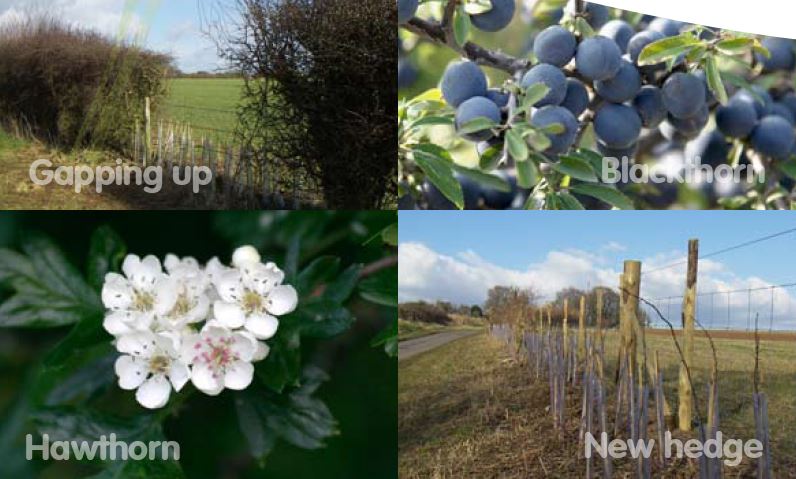
Any gaps in hedges left after coppicing or laying can be filled by planting with locally occurring species. It can be an opportunity to increase the botanical diversity of the hedge or add trees to the hedge line. Some gappy hedgerows may not be in need of coppicing or laying but, instead, simply gapped up.
- 20 to 40 cm root trainers or whips should be used which are planted at six plants per metre in a staggered double row.
- All plants should be of local, native stock mimicking those species already present.
- Planting should occur between October to March.
- Maintain a weed free area of at least one metre around each plant for the first three to five growing seasons and use tubes, spirals or quills to protect young plants from damage and grazing.
For more information
This advice note only provides general guidance on hedgerow management; for further site specific advice please contact one of Basingstoke and Deane Borough Council’s partner organisations: Hampshire Farming and Wildlife Advisory Group provides hedgerow management advice for farmers; telephone 01483 810887 or email hampshire@fwag.org.uk. The Hampshire and Isle of Wight Wildlife Trust can also provide hedgerow management advice; please contact the Loddon and Eversley Project Manager on 01256 381186.
Other useful links
The National Hedgelaying Society has information on local contractors. Thanks to FWAG for providing useful comments on the advice contained within this leaflet
Sign up for email updates
Receive information on council services, news and events by email.
Subscribe© 2026 Basingstoke and Deane Borough Council